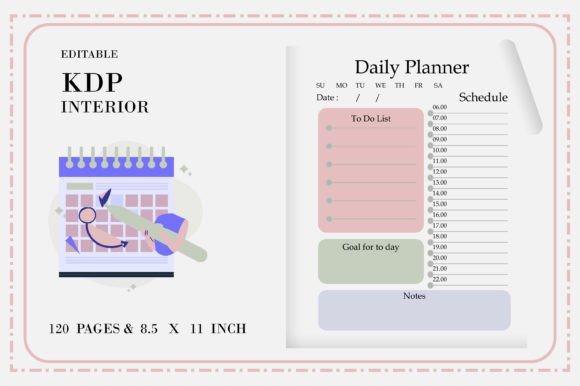
Daily Planner Interiors for KDP: Leveraging High-Resolution Editable Assets
The Strategic Value of Professional Interior Files
For self-publishers and digital entrepreneurs, the quality of a book’s interior is just as critical as its cover. In the saturated market of Amazon Kindle Direct Publishing (KDP), differentiation often comes down to user experience and production value. A Daily Planner is not merely a collection of blank lines; it is a functional tool that requires precise layout engineering. Utilizing high-resolution, print-ready interiors specifically designed for KDP eliminates the most common technical hurdles associated with low-content publishing. When creators have access to professional-grade assets, they shift their focus from troubleshooting formatting errors to building a brand and marketing their products.
The availability of fully editable source files transforms a static product into a dynamic business asset. Rather than being locked into a single design, sellers can adapt layouts to suit specific niches, seasonal trends, or customer feedback. This flexibility is essential for long-term success in the planner category, where consumer preferences evolve rapidly. By starting with a robust foundation, such as a 120-page pre-formatted template, publishers ensure consistency across their catalog while maintaining the agility to pivot when market demands change.
Technical Specifications and Print Readiness
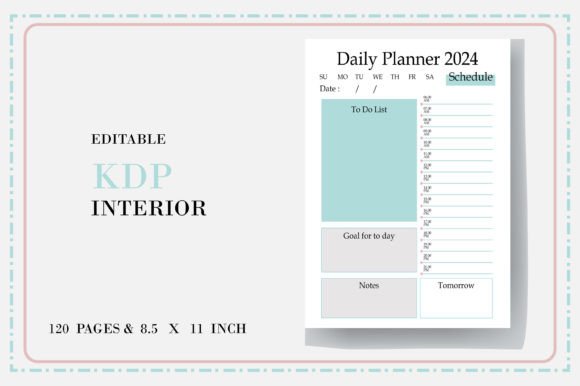
Understanding the technical parameters of KDP printing is non-negotiable for avoiding rejection or poor customer reviews. The specific configuration of these Daily Planner interiors addresses the platform's requirements directly. The standard Letter Size paper dimension of 8.5″ x 11″ is the industry benchmark for productivity journals, offering ample writing space without exceeding typical shipping weight thresholds. Crucially, this design utilizes a No Bleed setting. For many new publishers, bleed settings are a primary source of error. A no-bleed interior ensures that all content remains safely within the margins, eliminating the risk of text being trimmed off during the binding process.
Resolution plays a pivotal role in perceived quality. Low-resolution PDFs often result in fuzzy text and pixelated graphics, which immediately signals an amateur product to buyers. These interiors are provided in high-resolution print-ready formats, ensuring crisp lines and sharp typography. When a customer receives a physical copy, the clarity of the grid lines, headers, and instructional text contributes significantly to their satisfaction. Furthermore, the inclusion of 120 pages strikes an optimal balance between substance and cost. It provides enough volume to be marketed as a comprehensive quarterly or academic planner while keeping printing costs low enough to maintain healthy royalty margins.
File Format Versatility: AI and PDF
The dual-file inclusion strategy caters to different levels of technical expertise and workflow needs. The PDF file serves as the immediate solution for those ready to upload. It is pre-flattened and optimized, requiring zero additional manipulation before submission to KDP. This "ready for upload" status accelerates time-to-market, allowing sellers to test new keywords or cover designs rapidly.
Conversely, the Editable Illustrator AI File unlocks advanced customization capabilities. Adobe Illustrator is the vector standard for print design, allowing for infinite scaling without quality loss. With this source file, a publisher can:
- Modify fonts to match specific branding guidelines or licensing requirements.
- Adjust margin sizes to accommodate different binding types or personal preferences.
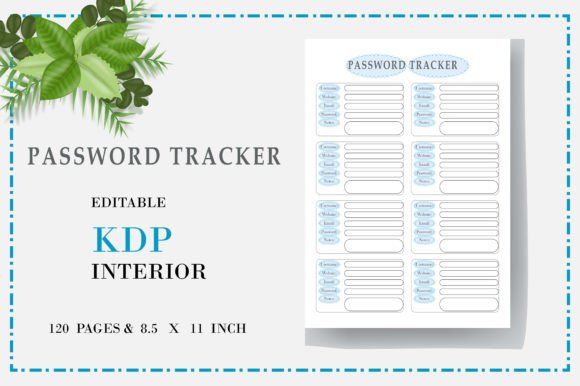
- Add or remove sections, such as gratitude logs, water trackers, or project planning grids.
- Change color schemes to create themed variations (e.g., pastel, monochrome, or corporate aesthetics).
This level of control ensures that the final product is unique. While the base structure is provided, the creative application remains entirely in the hands of the seller, preventing duplicate content issues that can arise from using unmodified stock templates.
Workflow Integration for Publishers and Creators
Incorporating pre-made interiors into a publishing workflow streamlines operations significantly. For educators creating classroom organizers, researchers designing data collection journals, or business owners producing team productivity tools, the design phase is often a bottleneck. Accessing a professionally structured Daily Planner template removes this friction. The 120-page count is already calculated to fit standard binding specifications, meaning users do not need to perform complex page-count math or adjust gutter margins manually.
For professional KDP sellers managing large catalogs, efficiency is key. Using a standardized, high-quality interior allows for batch processing. Sellers can create multiple cover variations targeting different demographics while utilizing the same reliable internal structure. This approach reduces quality assurance time; once the master file is verified as print-ready, every subsequent variation inherits that compliance. Additionally, having an editable AI file facilitates quick updates. If Amazon changes trim size tolerances or if customer feedback indicates a need for wider writing lines, the master file can be adjusted once and exported for the entire series.
Niche Adaptation and Market Relevance
A generic daily planner faces stiff competition, but a specialized planner commands higher prices and loyalty. The editable nature of these files supports niche adaptation. A real estate agent might need a planner with property showing slots; a teacher might require lesson planning blocks; a fitness coach might want macro-tracking tables. Because the design is fully editable, these modifications can be made without rebuilding the document from scratch. This capability aligns with modern SEO and marketing strategies, where specificity drives conversion. Instead of competing for the broad term "daily planner," sellers can target long-tail keywords like "ADHD friendly daily organizer" or "nurse shift planner" by simply tweaking the existing high-resolution assets.
Design Considerations for User Experience
Functionality dictates the success of any planner. The layout included in these files has been engineered with usability in mind. Adequate white space prevents cognitive overload, while clear hierarchy guides the user through their day. When customizing the editable AI file, it is important to maintain these UX principles. Changes should enhance, not detract from, the utility of the book. For instance, while adding decorative elements can improve aesthetic appeal, they must not encroach on the writable area or reduce contrast to the point of illegibility.
Paper choice also interacts with design. Although the file is no-bleed, understanding how ink sits on standard KDP paper (55# or 60# white/cream) is vital. Heavy ink coverage can lead to bleed-through even without full-bleed printing. The provided high-resolution files typically utilize optimized line weights and grayscale values that print cleanly on standard book paper. When editing, users should avoid introducing heavy solid black backgrounds or saturated colors that standard offset printing cannot handle effectively. Sticking to the established design parameters ensures the physical product matches the digital proof.
Maximizing Asset Value Through Customization
To truly leverage these game-changing interiors, sellers should view them as a starting point rather than a finish line. The value proposition lies in the combination of technical compliance and creative freedom. Before uploading, it is advisable to order a physical proof copy. This step validates that the high-resolution export translates correctly to print and that the no-bleed margins provide sufficient safety zones. It also offers an opportunity to assess the tactile experience of the 120-page block.
Furthermore, documenting the customization process can serve as secondary content. Sharing how a generic template was transformed into a niche-specific tool builds authority and trust with potential buyers. It demonstrates expertise and attention to detail. Whether the end user is a hobbyist organizing their craft projects or a corporate executive managing quarterly goals, the underlying quality of the Daily Planner interior supports their objectives. By prioritizing print readiness, editability, and user-centric design, publishers can create products that stand out in a crowded marketplace and deliver genuine value to their audience.
Ensuring Long-Term Viability
The landscape of self-publishing is dynamic. Platforms update their guidelines, and consumer tastes shift. Owning the editable source files future-proofs the investment. If KDP introduces new trim sizes or paper options, the AI file can be resized and reformatted without purchasing new templates. This sustainability aspect is crucial for building a resilient publishing business. Additionally, as designers improve their skills, they can revisit older titles and upgrade the interiors using the same master files, keeping the backlist fresh and competitive.
Ultimately, the integration of high-resolution, editable Daily Planner interiors represents a maturation of the KDP business model. It moves beyond simple arbitrage toward genuine product development. By combining technical precision with creative adaptability, sellers can produce planners that are not only compliant and professional but also deeply resonant with their target audiences. The result is a superior product that satisfies both the algorithmic requirements of the platform and the practical needs of the user.