Thanksgiving Turkey Worksheet for Kids: A Practical Resource for Holiday Planning
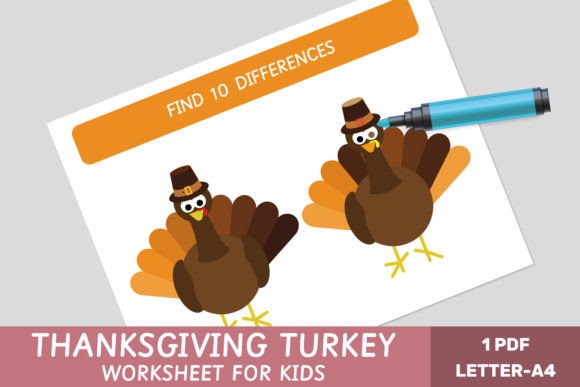
Integrating structured activities into holiday schedules requires foresight and reliable resources. The Thanksgiving Turkey Worksheet for Kids serves as a functional tool within this planning ecosystem, specifically designed to bridge the gap between festive celebration and cognitive engagement. This resource is not merely a coloring page; it is a targeted visual discrimination exercise where children identify ten distinct differences between two illustrated turkeys. For educators, parents, and caregivers managing holiday workflows, this printable asset offers a zero-preparation solution that maintains routine and focus during a period often characterized by disruption.
In the broader context of seasonal management, this worksheet functions as a transitional anchor. Whether utilized in a classroom setting before the holiday break or at home during family gatherings, it provides a defined task with clear parameters. The activity supports executive function development through observation and comparison, making it a strategic choice for adults who value purposeful play over passive entertainment. By incorporating this specific "find the differences" game into your repertoire, you streamline the process of keeping young minds engaged while preserving the festive atmosphere.
Strategic Implementation Across Environments
The utility of the Thanksgiving Turkey Worksheet for Kids extends across multiple operational environments. Understanding where and how to deploy this resource maximizes its effectiveness and ensures it aligns with your specific logistical needs.
Classroom Workflow Integration
For educators, the days leading up to Thanksgiving often involve shifting student attention spans and modified schedules. This worksheet acts as an effective transition mechanism. It can serve as a morning work assignment to settle students upon arrival, a quiet independent task during reading centers, or a structured filler activity between lessons and recess. Because the activity is self-contained and requires no instruction beyond the initial prompt, it allows teachers to manage administrative end-of-term tasks while students remain productively occupied. The cognitive demand is sufficient to maintain engagement without causing fatigue, striking a balance appropriate for pre-holiday energy levels.
Home and Family Gathering Management
At home, the workflow shifts from academic structure to social coordination. During Thanksgiving preparations, adults are often multitasking between cooking, hosting, and cleaning. This worksheet provides a portable, screen-free station for children. It can be set up at a designated kids' table, used as a travel activity during transit to family gatherings, or deployed as a calm-down tool after high-energy interactions. Unlike open-ended crafts that require supervision and cleanup, this spot-the-difference game is contained and low-mess, fitting seamlessly into the adult workflow of holiday hosting.
Homeschool and Hybrid Learning Contexts
For homeschooling families maintaining a rhythm through the holidays, this resource offers thematic consistency without heavy lesson planning. It integrates naturally into units on autumn, harvest, or visual perception skills. As a standalone activity, it fulfills fine motor and critical thinking objectives while honoring the season. It can also serve as a review tool for following directions or practicing patience, reinforcing behavioral goals established earlier in the year.
Technical Specifications and Print Optimization
To ensure the Thanksgiving Turkey Worksheet for Kids performs as intended, attention to technical execution is necessary. The quality of the physical output directly impacts user experience and durability. This resource is engineered for versatility, offering two standard size options to accommodate different regional standards and equipment capabilities.
- US Letter (8.5” x 11”): Optimized for standard North American home printers and office copiers. This size fits conventional binders and folders, making it easy to file or distribute in US-based classrooms.
- A4 (210 mm x 297 mm): Formatted for international standards. Selecting this option prevents scaling issues or margin cutoffs when printing outside of North America, ensuring the visual integrity of the turkey illustrations remains intact.
Paper selection is a critical variable in the production process. While standard copy paper is functional, printing on heavy cardstock is strongly recommended. Cardstock provides the rigidity necessary for repeated handling, especially if the worksheet is placed on a table without a clipboard or used by younger children who may press hard with pencils or markers. The increased weight also enhances the perceived value of the activity, signaling to children that this is a special occasion resource rather than disposable scratch paper.
Printer settings should be adjusted to "Best" or "High Quality" mode. Visual discrimination tasks rely entirely on clarity; pixelation or faint lines can turn a fun challenge into a frustrating exercise. Ensuring high contrast between the line art and the background is essential for accessibility and engagement. If printing in color, verify ink levels beforehand to avoid streaking that could obscure one of the ten differences.
Cognitive Value and Skill Development
Beyond its logistical convenience, the Thanksgiving Turkey Worksheet for Kids delivers measurable educational outcomes. The "find 10 differences" format is a classic visual perception exercise that targets specific developmental milestones. Understanding these benefits helps adults articulate the value of the activity to stakeholders, whether those are school administrators, parents, or the children themselves.
Visual Discrimination: Children must scan complex images to detect subtle variations in shape, size, orientation, and detail. This skill is foundational for reading readiness, as it mirrors the process of distinguishing between similar letters and words.
Sustained Attention: Locating all ten differences requires persistence. The task cannot be completed in a single glance; it demands systematic scanning and re-evaluation. This builds stamina for longer, more complex tasks later in the academic year.
Working Memory: As children find each difference, they must hold that information in mind while searching for the next, preventing duplicate counting and tracking progress toward the goal of ten.
Fine Motor Control: Circling or marking the differences requires precise hand-eye coordination. Using a pencil or crayon to indicate findings reinforces grip strength and dexterity in a functional context.
Workflow Compatibility and Resource Pairing
This worksheet does not exist in isolation. Its effectiveness increases when paired with complementary tools and integrated into existing systems. Consider the following integration points to enhance the overall experience:
- Dry Erase Sleeves: For reusable implementation, slide the printed cardstock sheet into a dry erase pocket. Children can use washable markers to circle differences, wipe them clean, and repeat the activity. This transforms a single-use printout into a sustainable learning station, ideal for classrooms with limited printing budgets or eco-conscious households.
- Magnifying Glasses: Adding magnifiers introduces a tactile element and scaffolds the task for younger participants or those with visual processing challenges. It turns the worksheet into a sensory investigation, extending engagement time.
- Timer Challenges: For older children or competitive groups, introduce a timed element. This adjusts the difficulty level without altering the physical resource, allowing the same worksheet to serve multiple age groups within a mixed-ability setting.
- Thematic Bundling: Combine this worksheet with other Thanksgiving-themed resources such as vocabulary cards, writing prompts, or math worksheets to create a comprehensive holiday packet. This reduces future planning time by establishing a ready-to-go activity bank.
Quality Control and User Experience Considerations
Before mass distribution or final deployment, conduct a quick quality check. Print a single test copy to verify that all ten differences are clearly visible and that the layout accommodates the chosen paper size without cropping. Ensure the instructions are legible and age-appropriate. If using the worksheet in a group setting, confirm you have sufficient quantities plus extras for mistakes or additional participants.
Consider the post-activity workflow as well. Will completed worksheets be displayed, collected for assessment, or sent home? Having a designated collection bin or display board prepared in advance streamlines the transition out of the activity. For digital-first workflows, consider scanning a master copy to create a backup PDF stored in cloud storage, ensuring access even if physical copies are lost or damaged.
The Thanksgiving Turkey Worksheet for Kids represents a convergence of seasonal tradition and practical pedagogy. By approaching its use with intentionality—selecting appropriate paper, optimizing print settings, understanding cognitive targets, and integrating it smoothly into daily routines—adults can transform a simple printable into a powerful tool for holiday management and child development. This resource exemplifies how thoughtful preparation enables both productivity and joy during the Thanksgiving season, supporting the dual goals of education and celebration without adding unnecessary complexity to an already busy time of year.