Integrating the Car Human Water Droplets V Apps Icon Set into Digital Design Workflows
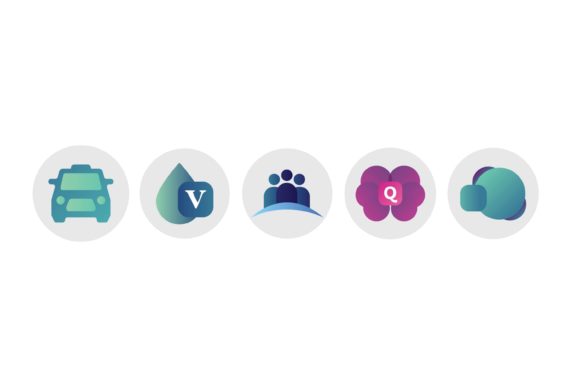
Visual consistency is often the most challenging aspect of cross-platform development. When building applications or websites that bridge automotive services, personal wellness, and utility functions, designers frequently struggle to find iconography that unifies these disparate themes. The Car Human Water Droplets V Apps Icon Set addresses this specific niche by providing a cohesive visual language for complex, multi-faceted digital products. This asset collection is not merely a set of static images; it is a functional component of a broader design system intended to streamline the interface creation process for Android, iOS, web platforms, and miscellaneous game assets.
For professionals managing tight production schedules, the value of this icon set lies in its technical versatility and thematic specificity. Delivered as a comprehensive ZIP package containing both EPS 10 and PNG files, it supports workflows ranging from high-fidelity vector editing to rapid prototyping. Understanding how to leverage these formats effectively can significantly reduce the time spent on asset generation and ensure that your final product maintains professional quality across all touchpoints.
Strategic Asset Preparation and File Management
Before importing any assets into your development environment, establishing a robust file management protocol is essential. The Car Human Water Droplets V Apps Icon Set arrives in a compressed ZIP format, which requires immediate organization upon extraction. Rather than leaving files in a generic downloads folder, integrate them directly into your project’s asset library or design system repository. This preparation phase prevents version control issues later in the development cycle.
The inclusion of EPS 10 files is critical for long-term project scalability. Vector formats allow for infinite resizing without quality loss, making them indispensable for responsive web design and high-density mobile displays. During the planning stage, use these vector files to create master symbols in tools like Adobe Illustrator, Figma, or Sketch. By converting the EPS files into native components early, you enable global changes. If a stakeholder requests a color adjustment or stroke weight modification after the initial implementation, updating the master component propagates the change across every instance in your design file. This capability transforms the icon set from a static resource into a dynamic part of your design infrastructure.
Conversely, the PNG files serve a different strategic purpose. These rasterized assets are optimized for immediate deployment and compatibility testing. They are particularly useful during the wireframing and low-fidelity prototyping phases where vector rendering might be unnecessary overhead. Organizing these PNGs by resolution and theme before development begins ensures that developers have ready-to-use assets for quick builds, while designers retain the vectors for final production polish.
Cross-Platform Implementation Strategies
Different platforms impose unique constraints on iconography, and the Car Human Water Droplets V Apps Icon Set is structured to accommodate these variations. For Android app development, the vector assets should be converted into XML drawables or adaptive icons. This ensures crisp rendering across the fragmented Android device ecosystem. The thematic combination of cars, humans, and water droplets is particularly relevant for apps involving car wash services, mobile detailing, hydration tracking for drivers, or eco-friendly transportation. When implementing these icons, maintain consistent padding and safe zones as defined by Material Design guidelines to prevent clipping on various screen aspect ratios.
iOS development requires a different approach focused on clarity and metaphor. Apple’s Human Interface Guidelines emphasize recognizability over intricate detail. The human and water droplet elements in this set are designed with sufficient negative space to remain legible at smaller sizes typical of tab bars and navigation menus. When integrating these assets into Xcode, utilize the asset catalog to manage @1x, @2x, and @3x variants derived from the source EPS files. This guarantees that Retina displays render the icons sharply while older devices receive appropriately sized assets to conserve memory.
Web implementation offers the most flexibility but also demands the most discipline. For responsive websites, consider converting the EPS sources to SVG format for direct embedding. This reduces HTTP requests and allows for CSS-based styling, such as hover states and animations. The water droplet icons, for example, can be animated to indicate loading states or successful form submissions in a booking interface. The car and human elements can serve as category markers for service selection pages. Because the set shares a unified stroke width and corner radius, mixing these icons with text-heavy interfaces creates a balanced visual rhythm that enhances user comprehension without overwhelming the layout.
Application in Game Development and Miscellaneous Projects
Beyond standard utility apps, this icon set finds practical application in gamification and educational software. In game UI design, consistency helps players intuitively understand mechanics. A water droplet icon universally signifies fluid resources, health, or cleaning mechanics, while car icons represent vehicles or transport objectives. The human element adds narrative context, suggesting character progression or user avatars. Using a pre-made set like Car Human Water Droplets V Apps Icon Set allows indie developers and small studios to maintain professional UI standards without commissioning custom art for every minor interface element. The PNG files are especially valuable here for game engines like Unity or Godot, where sprite sheets can be assembled quickly for HUDs and inventory systems.
Maintaining Visual Consistency Across Mixed Assets
A common pitfall when using themed icon sets is the temptation to mix them with unrelated graphics, resulting in a disjointed user experience. To maximize the effectiveness of this collection, treat it as the foundational layer of your visual identity. If additional icons are required that fall outside the car, human, or water themes, customize new additions to match the existing set’s geometric properties. Use the EPS files as a template to trace new symbols, ensuring identical line weights, corner radii, and optical sizing.
This alignment process is crucial for brand perception. Users subconsciously associate visual consistency with reliability and professionalism. In contexts involving automotive care or personal services, trust is paramount. An interface where the car wash icon looks polished but the payment icon appears crude creates cognitive friction. By anchoring your design system with the Car Human Water Droplets V Apps Icon Set and extending its style rules to supplementary assets, you create a seamless environment that supports user tasks rather than distracting from them.
Workflow Efficiency and Quality Control
Incorporating pre-designed assets should accelerate production, not complicate it. Establish a quality control checkpoint specifically for icon integration. Verify that all exported PNGs have transparent backgrounds and are cropped to standard grid sizes. Test vector conversions to ensure no anchor points were lost during format translation. For web projects, validate that SVG code is clean and free of unnecessary metadata that could bloat page load times.
Efficiency also extends to collaboration. When working with teams, document how the icon set should be used. Create a style guide section that specifies which icon represents which function. For instance, clarify whether the water droplet indicates "washing," "hydration," or "fuel efficiency" within your specific context. Ambiguity in icon semantics leads to user errors. By defining these meanings early and referencing the Car Human Water Droplets V Apps Icon Set as the authoritative source, you align designers, developers, and product managers around a shared visual vocabulary.
Furthermore, consider the licensing and usage rights associated with the asset pack. Ensure that your intended use case—whether commercial app distribution, internal enterprise tools, or client work—aligns with the provided license terms. Proper attribution and compliance are part of professional asset management. Keeping records of the source ZIP and license documentation within your project repository safeguards against future legal or administrative complications.
Long-Term Maintenance and Scalability
Digital products evolve, and your iconography must evolve with them. The EPS 10 format ensures that the Car Human Water Droplets V Apps Icon Set remains viable even as display technologies advance. Future-proofing your asset library means retaining the original source files indefinitely. Never rely solely on exported PNGs, as they cannot be edited without quality degradation. When updating an app for a new OS version or rebranding a website, returning to the vector source allows for effortless adaptation.
Regularly audit your icon usage analytics if available. Heatmaps and click-through rates can reveal whether specific icons are performing their intended communicative function. If users consistently misinterpret the human figure or fail to recognize the water droplet, revisit the source vectors to adjust contrast, size, or context. The flexibility of this icon set supports iterative improvement based on real user data. This feedback loop transforms static assets into living components of your product strategy.
Ultimately, the Car Human Water Droplets V Apps Icon Set serves as a practical solution for niche interface challenges. It bridges the gap between mechanical, biological, and elemental concepts through unified design. By approaching its implementation with systematic preparation, platform-specific optimization, and ongoing quality management, professionals can extract maximum value from this resource. The result is not just a collection of pretty pictures, but a coherent, efficient, and scalable visual system that enhances both the development process and the end-user experience.